A telecoms retailer invites customers to drop off old phones, chargers and routers at its stores for a month. The bins fill quickly, a logistics contractor collects them, and the company announces that several tonnes of e-waste have been “responsibly recycled”. The tonnage may be accurate. But it measures what was collected, not what was recycled, and many companies cannot show evidence for the difference.
That difference matters more in Asia than almost anywhere else. The UN’s Global E-waste Monitor 2024 estimates that the world generated 62 million tonnes of e-waste in 2022. Less than a quarter of that mass was documented as properly collected and recycled. Countries in Asia generated close to half of the global total, yet relatively few have e-waste legislation or clear collection targets. In this setting, an unverified recycling claim is a credibility risk. It is also a legal and reputational risk if devices end up somewhere they should not.
This article sets out how businesses can turn an e-waste take-back programme into a claim they can defend, with evidence at every stage.
Why e-waste claims are harder to prove than they look
E-waste is not one material. A single collection bin can hold lithium batteries, circuit boards, plastic casings, glass, cables and lamps containing mercury. Each fraction follows a different route, and many pass through several companies before they become recovered material. The usual weak points include:
- Weight collected is not weight recycled. Some material is reused, some is recovered, and some becomes residue that is landfilled or incinerated.
- The chain of custody is long. Collector, aggregator, dismantler, pre-processor and smelter may all be separate businesses, sometimes in different countries.
- Informal recycling is widespread. In many Asian markets, devices sold to informal dismantlers may be stripped for valuable parts while hazardous fractions are dumped or burned.
- Data-bearing devices carry a second risk. Laptops, phones and storage drives need verified data sanitisation or destruction, not only recycling.
The regulatory backdrop has tightened
Several recent changes affect how companies in the region should document e-waste flows. Requirements differ by jurisdiction and continue to change, so businesses should confirm current obligations with the relevant authority.
- Cross-border shipments: Since 1 January 2025, amendments to the Basel Convention have placed all transboundary movements of e-waste, hazardous and non-hazardous, under the prior informed consent procedure. The amendments bind all Parties except those that formally notified non-acceptance.
- Malaysia: E-waste imports became an absolute prohibition under the Customs (Prohibition on Imports) Order on 1 April 2026. Industrial e-waste is regulated as scheduled waste under the Environmental Quality (Scheduled Wastes) Regulations 2005. Regulations for household e-waste have been in development for several years.
- Singapore: E-waste extended producer responsibility (EPR) operates under the Resource Sustainability Act. Since July 2021, producers of regulated consumer products above set supply thresholds must join and finance a licensed producer responsibility scheme. Large retailers with at least 300 square metres of floor area must provide in-store collection for ICT equipment, lamps and batteries.
- India: The E-Waste (Management) Rules, 2022 have applied since 1 April 2023. Producers, refurbishers and recyclers must register on a central portal, and producers meet recycling targets through EPR certificates generated by registered recyclers. Notably, the recycled quantity is calculated from end-products, which is designed to prevent inflated claims.
India’s approach offers a useful lesson even for purely voluntary programmes. The credible number is the output of recycling, not the input to collection.
The Collection-to-Recovery Evidence Chain
A take-back claim is only as strong as its weakest link. One practical way to organise the evidence is a five-link chain. Each link answers a separate question and needs its own records.
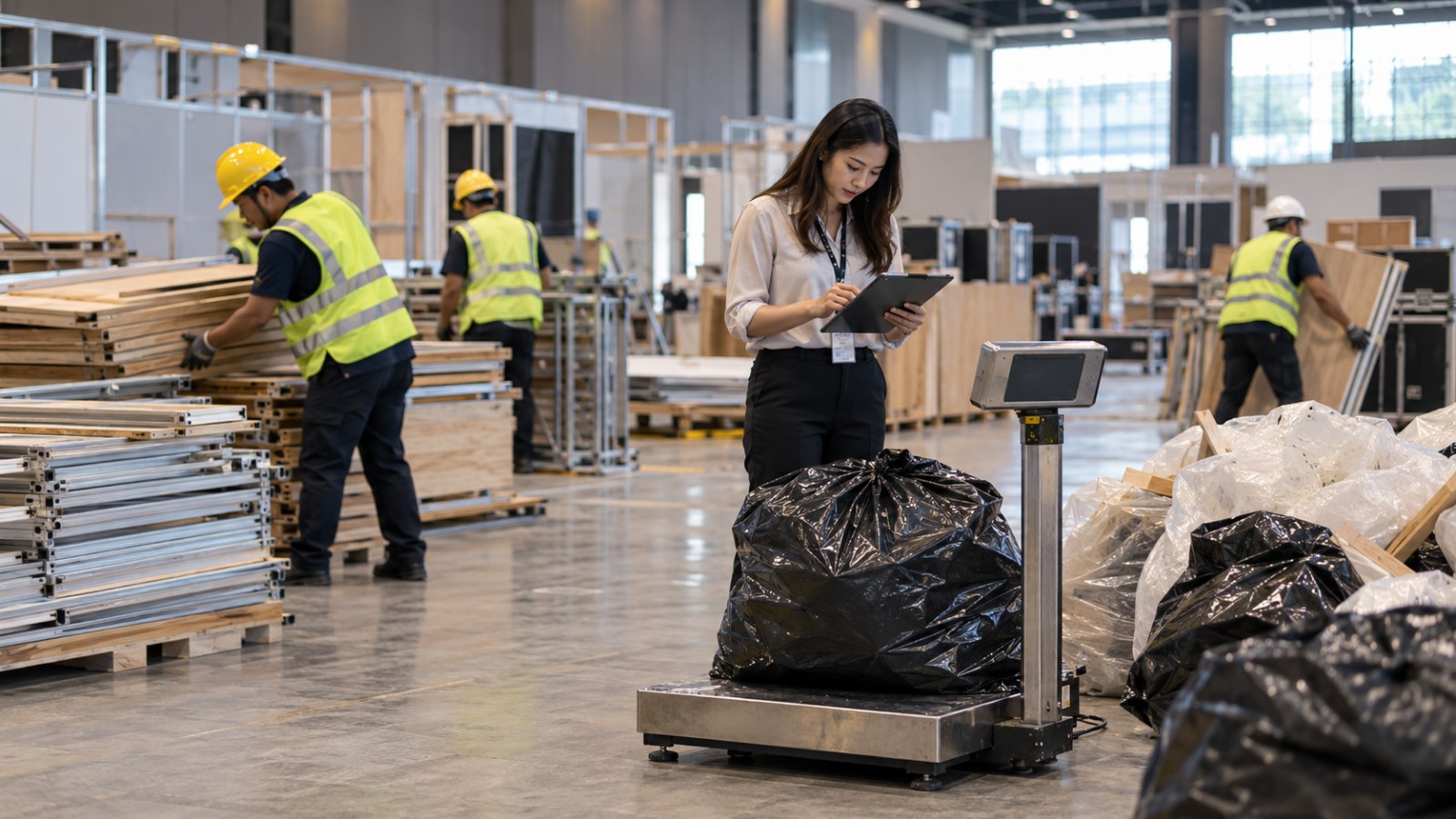
- Collected: what entered the programme? Weight by product category, unit counts where practical, collection location and date. Calibrated scales are better than estimates based on how many bins were filled.
- Transferred: who held it, and when? Transport documents, handover records and weighbridge tickets at each transfer point. A drop in weight between collection and receipt should be explained, not ignored.
- Processed: who treated it, and were they authorised to? The licence or registration of the receiving recycler in its jurisdiction, receiving records, and serial-level data destruction certificates for data-bearing assets.
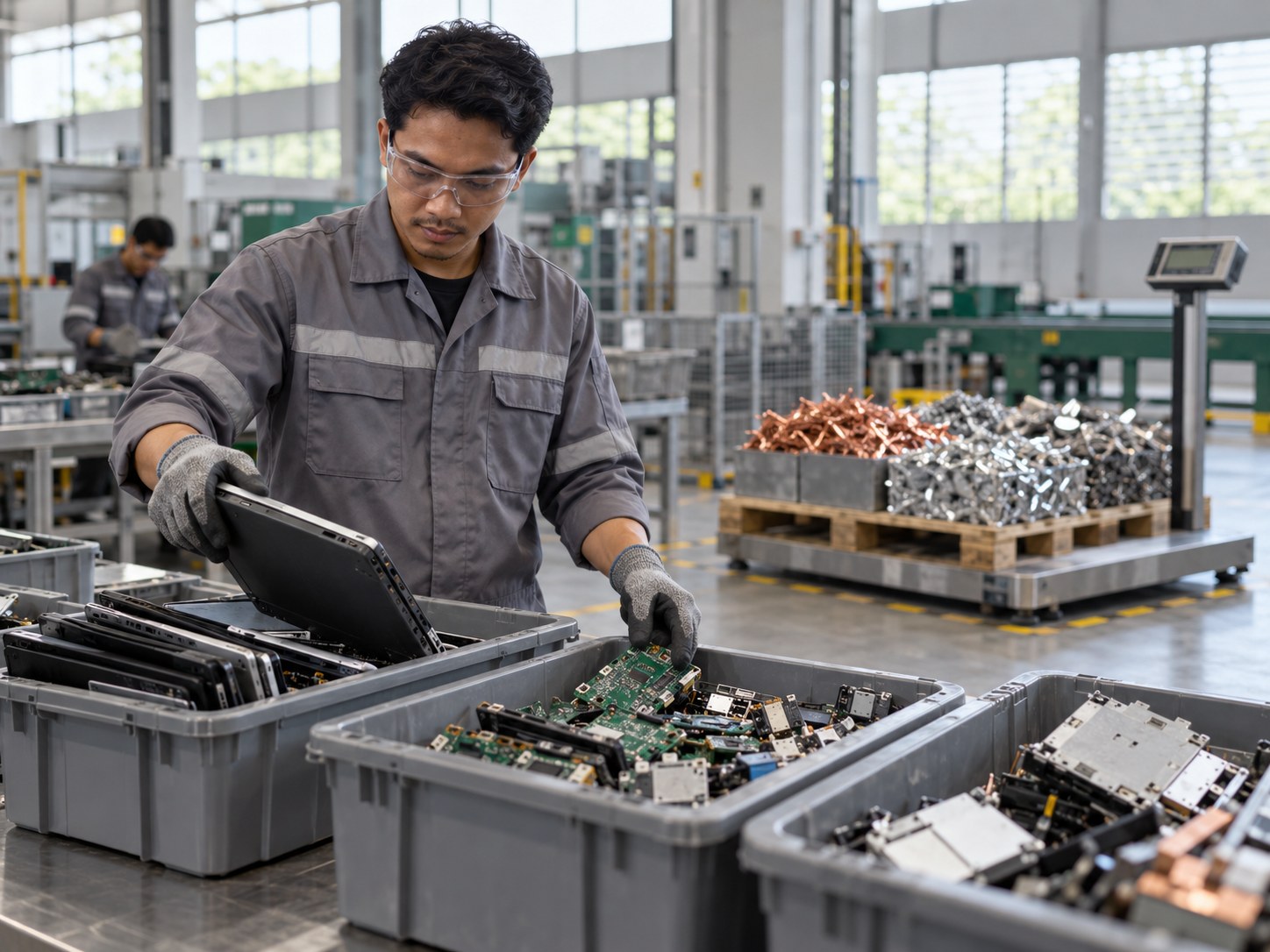
- Recovered: what came out? Output tonnages by fraction (ferrous and non-ferrous metals, plastics, glass, circuit boards, batteries) and where each fraction went next.
- Accounted: does it reconcile? A mass balance comparing input weight with recovered outputs, units reused and residues sent for disposal. Units reused should be reported separately from tonnes recycled, never added together.
A programme that can show all five links can make a specific, defensible claim. A programme that can show only the first link should describe its result as “collected for recycling”, and nothing stronger.
What your claim says versus what you need to show
| Claim | Evidence needed | Common gap |
|---|---|---|
| “We collected X tonnes of e-waste” | Scale or weighbridge records at collection and handover, by category | Tonnage estimated from bin counts or truckloads |
| “X tonnes were recycled” | Recycler output data by fraction, reconciled with input weight | Certificate of recycling that simply restates the input weight |
| “Responsibly recycled” | Recycler licence, independent audits or certifications, list of downstream vendors | No visibility beyond the first recycler |
| “Processed locally” or “not exported” | Downstream destination records and, where relevant, permits and consent documents | Assumption based on the recycler’s address |
| “Data securely destroyed” | Serial-number-level sanitisation or destruction certificates | A single batch certificate with no asset list |
| “Devices given a second life” | Functional test records, units refurbished, sold or donated | Reused units also counted in recycled tonnage |
Reuse, recycling and recovery are different claims
Reuse generally keeps more value and avoids more environmental impact than recycling, so a programme that refurbishes devices may have a stronger story to tell. But reuse, material recycling and energy recovery are different outcomes, and they should be reported separately. A refurbished laptop donated to a school is a reuse result and may also be a social contribution. It should not also appear in the recycled tonnage figure.
The same discipline applies to the difference between commitment and achievement. “We aim to collect 100 tonnes by 2028” is a target. “We collected 40 tonnes in 2025, of which 36 tonnes were processed by licensed recyclers and 31 tonnes were recovered as materials” is a performance claim. Only the second can be checked.
Choosing a recycling partner you can stand behind
Most of the evidence chain sits with the recycler, so partner selection is effectively an evidence decision. Procurement and sustainability teams can use this checklist:
- Confirm the recycler’s current licence or registration with the environmental authority in its jurisdiction.
- Ask whether the facility holds an independent electronics recycling certification, such as R2 (developed by Sustainable Electronics Recycling International) or e-Stewards (created by the Basel Action Network). Both address downstream due diligence and data security.
- Request a list of downstream vendors for each major fraction, especially batteries, circuit boards and lamps.
- Require output reporting by fraction and a periodic mass balance, not only certificates of receipt.
- Write audit rights and site visits into the contract.
- For corporate IT assets, require serial-level data destruction records.
A certification is a useful signal, but it is not proof of a particular batch’s fate. It shows that a facility’s systems were audited, not that every kilogram from your programme went where it should. The evidence chain still needs to be built for your own material.
Common mistakes in e-waste programme reporting
- Reporting collection tonnage as recycling tonnage.
- Accepting a certificate of recycling with no output breakdown.
- Counting devices that were resold by a contractor as “recycled”.
- Describing a programme as “zero landfill” without residue data from downstream processors.
- Comparing figures across years without noting changes in collection points, product categories or partners.
- Treating EPR compliance and voluntary sustainability claims as the same thing. Meeting a legal obligation is the baseline, not an additional achievement.
What to measure
A compact set of KPIs gives management, auditors and customers a clear picture:
- Tonnes collected, by product category and collection channel.
- Percentage of collected tonnage with recycler-confirmed receipt and processing.
- Recovered output tonnes by material fraction.
- Units reused or refurbished, reported separately.
- Residue sent to landfill or incineration, in tonnes.
- Percentage of downstream volume traced to a final processor.
- Data-bearing assets with serial-level destruction records.
- Number of collection points and participants, where the programme is public-facing.
Businesses that already collect supplier or waste data for sustainability reporting can add these fields to existing systems instead of building a separate process.
When a take-back programme becomes a recognised achievement
Some collection programmes grow large enough to stand out regionally, whether by total tonnage recovered in a defined period, the number of collection points operated, or the number of people who took part. The organisations behind them often want independent recognition, and the evidence chain described above is what makes that credible.
Asia Record, which documents measurable achievements by businesses and organisations across Asia, assesses a proposal by comparing a clearly defined claim with supporting evidence and the conditions under which it was measured. Its published approach to record certification in Asia reviews submissions for completeness, consistency, measurability, verifiability and ethical execution. Those are the same qualities a well-run take-back programme should already have.
For a business considering how to get an Asia Record for an e-waste milestone, the practical starting point is to define the claim narrowly. That means stating what was achieved (for example, tonnes recovered rather than tonnes collected), the period, the geography and the measurement method, and confirming the evidence requirements before the collection period begins. An Asia Record application built on weighbridge records, recycler output data and a reconciled mass balance is far stronger than one based on a campaign headline.
Record recognition and regulatory compliance serve different purposes. Becoming an Asia Record holder recognises a documented achievement. It does not replace EPR obligations, recycler licensing, environmental permits or Basel Convention requirements, and it does not certify that a recycler meets legal standards.
The evidence is the achievement
E-waste programmes attract public interest because they are visible: branded bins, collection weekends, tonnage announcements. Their environmental value, however, depends on what happens after the material leaves the bin. Companies that can trace devices from drop-off to recovered material can make specific claims, answer regulators and customers with confidence, and identify which partners deserve their business. Companies that cannot should report what they can prove, and treat the gaps as the next thing to fix.