
A property developer announces the country’s first net-zero-ready township. A logistics firm describes itself as running Asia’s greenest fleet. A packaging supplier promotes the region’s largest recycling programme. Each claim might be true. But each also makes an unspoken promise: that the company has checked its competitors, defined what it is measuring, and can produce the evidence when asked. Many cannot.
Superlative claims such as first, largest, most, best, leading and No.1 are among the most persuasive words in sustainability communication. They are also among the hardest to defend. A statement like “we reduced packaging waste” only has to be true about the company making it. A superlative also has to be true about everyone else. Regulators, competitors and customers across Asia are increasingly testing that second half.
Why superlatives carry more risk than ordinary green claims
An ordinary environmental claim describes your own performance. A superlative is a comparative claim, even when no competitor is named. Saying you have the largest rooftop solar installation of any retailer in a country is a statement about every other retailer’s rooftops in that country. If one rival has a bigger system, the claim is misleading even if your own figures are accurate. The same is true if the comparison was quietly limited to listed companies or to a single year.
The broader principles of communicating sustainability achievements without greenwashing still apply. Superlatives are harder for three further reasons:
- They depend on data you do not control. Competitors’ figures may be unpublished, estimated or reported on a different basis from yours.
- They expire. A genuine “first” stays first, but “largest” or “most” can be overtaken next quarter. A claim that was accurate at launch may be wrong when it is still on the website two years later.
- They are read broadly. Readers rarely notice qualifiers. “Asia’s greenest fleet” will usually be understood as an overall environmental judgment, not a narrow comparison of tailpipe emissions per kilometre.
What regulators in Asia are signalling
Asia has no single rulebook for superlative sustainability claims. Instead, general consumer protection and advertising rules are being applied more actively to environmental and quality claims, and the direction is broadly consistent across markets.
| Market | Instrument | Why it matters for superlatives |
|---|---|---|
| Singapore | Guide on Quality-Related Claims, Competition and Consumer Commission of Singapore (October 2025) | Claims should be true, clear, meaningful, accompanied by material information and supported by evidence. Comparisons must be fair and substantiated, and claims should be reviewed periodically. |
| Malaysia | Malaysian Code of Advertising Practice, administered by the Advertising Standards Authority Malaysia | ASA Malaysia has stated publicly that words such as “No.1”, “Most” and “Best” are superlatives that require substantiation. |
| Japan | Act against Unjustifiable Premiums and Misleading Representations; Consumer Affairs Agency report on “No.1” representations (September 2024) | The review focused on the methods behind rankings. It found satisfaction surveys that did not check whether respondents had used the product. |
| India | Guidelines for Prevention and Regulation of Greenwashing or Misleading Environmental Claims, 2024, Central Consumer Protection Authority | Environmental claims must be backed by verifiable evidence, with the methodology and data disclosed. Claims such as recyclable or climate-positive need statutory or independent third-party verification. |
| South Korea | Environmental labelling and advertising rules overseen by the Ministry of Climate, Energy and Environment | Recorded violations involving the national Environmental Label rose from 485 in 2020 to 1,322 in 2024. Many involved labels used after certification had expired. |
| European Union (relevant to Asian exporters) | Directive on Empowering Consumers for the Green Transition, applying from 27 September 2026 | Bans unverified generic environmental claims and offset-based claims of neutral or reduced emissions. Future targets must be backed by a detailed plan and independent verification. |
Enforcement is already happening. In Singapore, the Advertising Standards Authority of Singapore banned a promotional campaign by VietJet in early 2025 after finding its environmental claims unsubstantiated.
Two lessons stand out from the table. First, regulators are examining the method behind a ranking, not only the headline; Japan’s review was mainly about how surveys were designed and who was asked. Second, a claim’s validity has a time limit. Korea’s expired-label cases and Singapore’s expectation of periodic review both describe claims that were once supportable but were not maintained. A revised edition of ISO 14021, the international standard for self-declared environmental claims, was also published in 2026. It places more weight on keeping documented evidence that shows a claim remains valid.
The five boundaries of a defensible superlative
A superlative is only as strong as the boundaries drawn around it. Before a “first”, “largest” or “most” claim is approved, its owner should be able to state all five of the following:
- Metric. What exactly is measured, and in what unit? A “largest recycling programme” could mean tonnes collected, tonnes actually recycled, number of collection points or number of participants. Each produces a different ranking.
- Comparison set. Compared with whom: all companies, listed companies, one sector, or businesses of a certain size? The narrower the set, the more clearly it must be disclosed.
- Geography. Is the claim about one city, one country, Southeast Asia or Asia? A national superlative cannot be stretched into a regional one without regional evidence.
- Period. On what date, or over which period, was the comparison true? “In 2025” or “as at 30 June 2026” can be defended. An undated “largest” usually cannot.
- Evidence. What documents prove your own figure? And what evidence shows that no one in the comparison set exceeds it? The second question is where most claims fail.
Consider a hypothetical example. “Asia’s largest corporate solar programme” leaves every boundary open. “The largest installed rooftop solar capacity across a single retail chain’s outlets in Malaysia as at 30 June 2026, measured in kWp and verified against commissioning records” is longer and less glamorous. But it can be tested, and so it can be defended.
Matching the claim to the evidence
Your own figure is the foundation of any comparison. It should rest on reliable ESG data collection and, for high-profile claims, on independent assurance of the underlying sustainability data. The comparative part then needs its own evidence, and the burden rises with the ambition of the wording.
| Claim type | Illustrative wording | Evidence typically needed | Risk |
|---|---|---|---|
| Own performance | “We cut Scope 1 and 2 emissions against our 2022 baseline” | Measured data, a documented methodology and baseline records, ideally externally assured | Lower |
| Narrow comparison | “Lower embodied carbon than our previous model” | Like-for-like data on both products using the same method | Moderate |
| “First” | “The first hotel group in Penang to publish assured water-use data” | Proof of when your action happened, plus a documented search showing no earlier case within the stated scope | Moderate to high |
| “Largest”, “most”, “highest” | “Most EV charging bays of any mall operator in the Klang Valley” | Your verified figure plus credible, dated data on all relevant competitors | High |
| “Best”, “leading”, “No.1”, “greenest” | “Asia’s greenest airline” | Usually a whole-of-life, multi-criteria assessment; often impossible to substantiate as worded | Very high |
Superlatives built on vague attributes, such as “greenest” or “most sustainable”, are the hardest to defend because the attribute has no single measurement. If the evidence supports only a narrow metric, the wording should be narrowed to fit the evidence.
A pre-publication checklist
- Can the reader see the metric, comparison set, geography, period and evidence, or reach them in one click?
- Has someone outside the marketing team checked competitor data, including unlisted and foreign companies operating in the stated geography?
- If the claim relies on a survey or ranking, were respondents qualified, was the sample adequate, and is the method disclosed?
- Is a commitment being presented as an achievement? “On track to become the first” is not “the first”.
- Does the claim rely on carbon credits to describe a neutral or reduced impact? If so, say so plainly, and remember that such claims are now prohibited in EU consumer marketing.
- Is there an evidence file (data, calculations, third-party documents, notes on the competitor search) that a regulator or journalist could review?
- Who owns the claim, and when will it be checked again? Give every superlative a review date.
- Will the claim travel? Wording approved for a local campaign may end up in investor materials, export packaging or EU-facing websites with stricter rules.
Who should sign off a superlative?
Superlatives usually start in marketing or corporate communications, where the incentive is to sound distinctive. The evidence usually sits elsewhere, in operations, sustainability, finance or procurement. Companies that handle this well treat high-risk claims as a governance control rather than a copy-editing task.
A workable model has three layers. The business unit that owns the data confirms the figure. The sustainability team confirms the methodology and the comparison set. Legal or compliance reviews the wording against the advertising and consumer protection rules in every market where the claim will appear. For claims in annual reports, investor presentations or listing documents, the board or its sustainability committee should know the claim is being made and how it is supported. Companies already apply this logic to financial forecasts: the more consequential the statement, the more senior and independent the sign-off.
A central register of approved superlatives, each with its evidence file and review date, also solves a common problem. Without one, old claims stay on product pages, sales decks and executive profiles long after they stopped being true.
Where independent record recognition fits
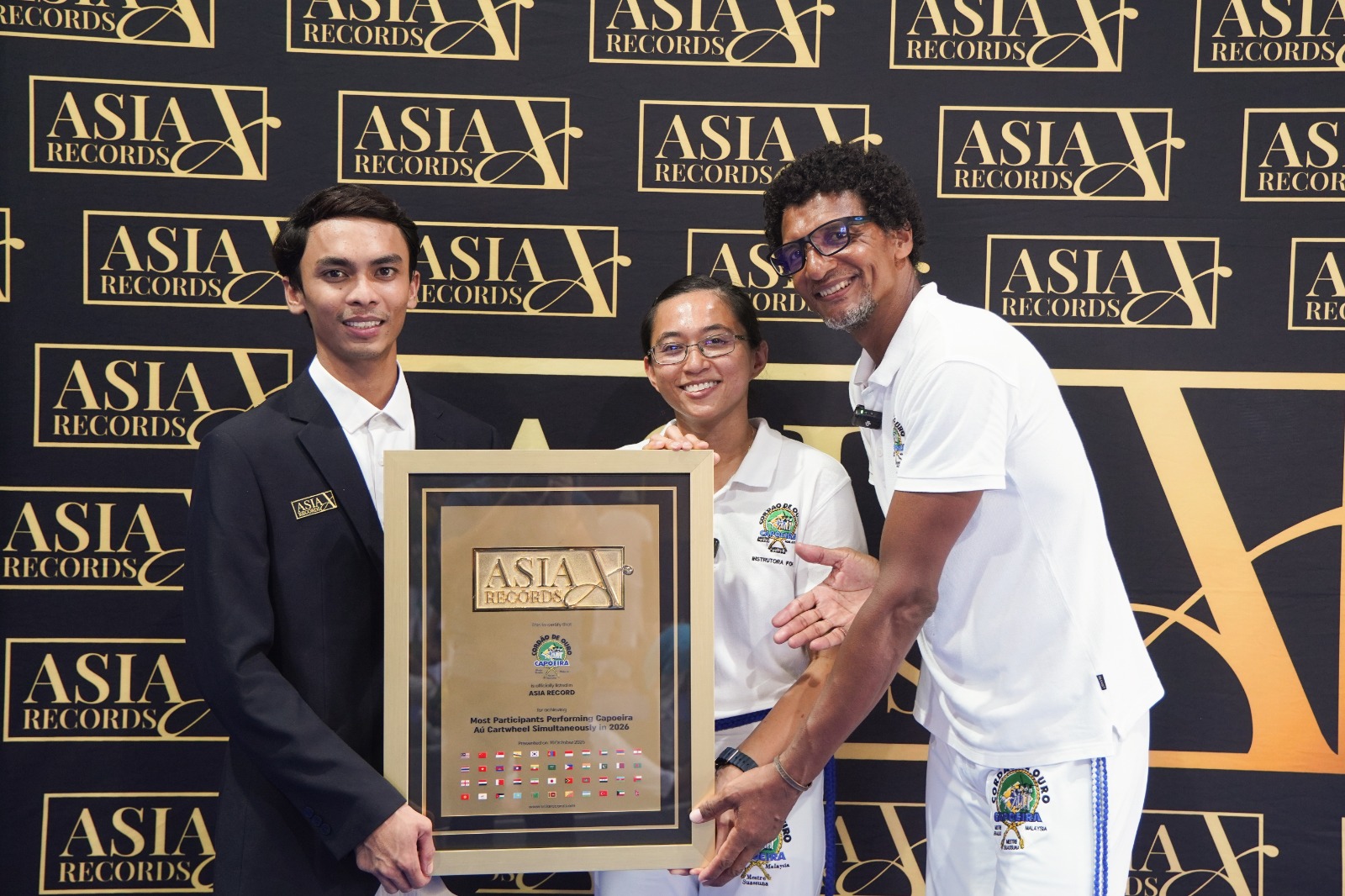
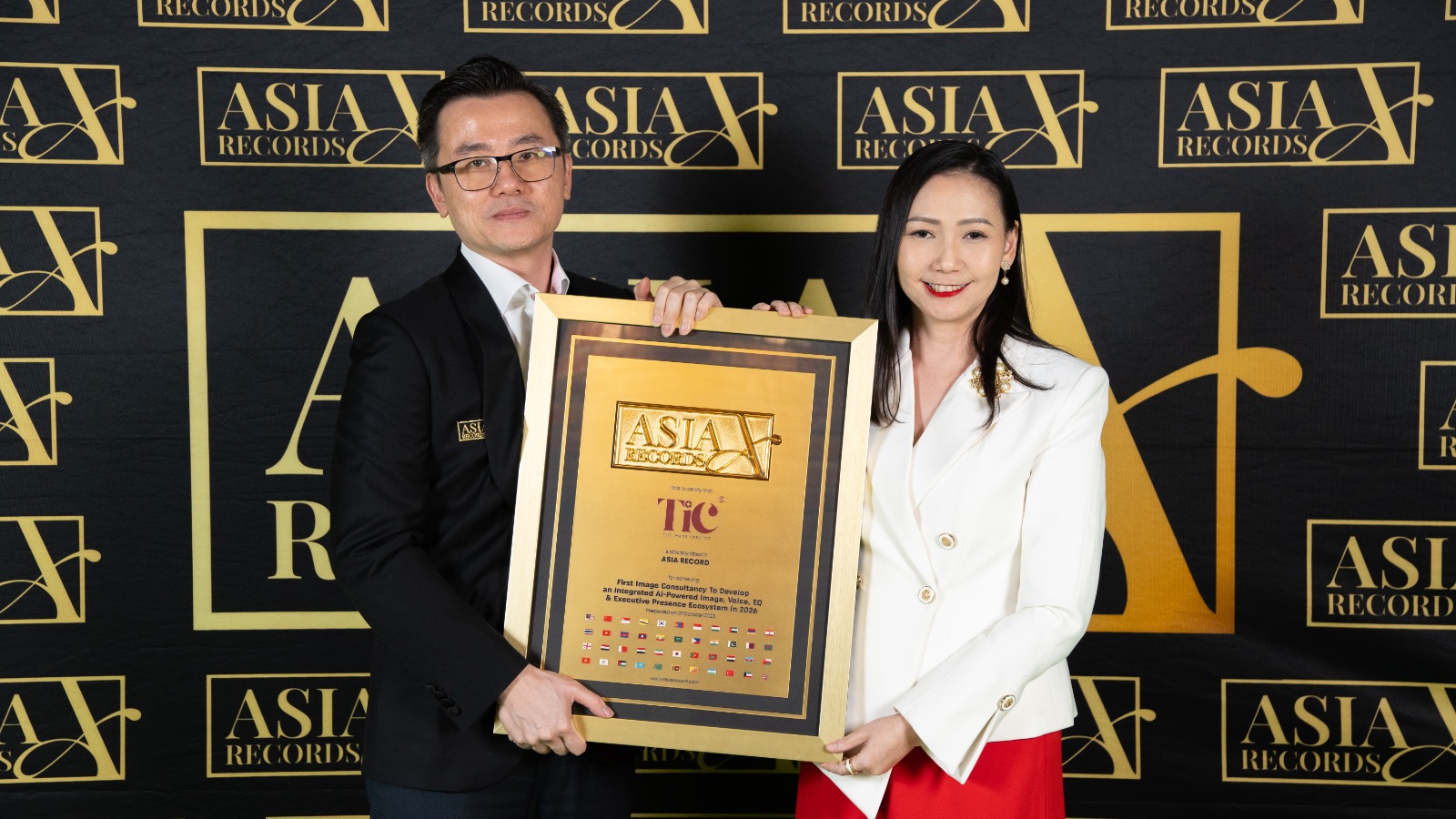
Some superlatives describe genuinely exceptional results. Examples include the largest participation in a coastal clean-up, the highest volume of material recovered through a single take-back scheme, or the first facility of its kind in a market. For results like these, a company may want more than its own assertion that the result is unmatched. Independent record recognition is one way to have a superlative examined by an outside body before it is publicised. Records are only one form of recognition, though, and awards, certifications, ratings and records each prove different things.
Asia Record, which documents measurable achievements by businesses and organisations across the region, assesses proposals by comparing a clearly defined record claim with supporting evidence and with the conditions under which the result was measured. Applicants are asked to state exactly what is being recognised and what measure determines success. They then confirm dates, locations, units and other conditions before submitting documentation for review. That sequence closely follows the five boundaries above. Preparing a sustainability milestone for record assessment can therefore be a useful discipline even for teams not yet ready to apply.
This kind of recognition has clear limits. Becoming an Asia Record holder is a form of business achievement recognition. It is not a regulatory certification, an assurance opinion on a sustainability report, an ecolabel or proof of legal compliance. An Asia Record certification for a specific record does not replace the substantiation that advertising codes and consumer protection laws require. Any public wording should stay within the exact scope of the recognised record.
Organisations wondering whether a milestone could qualify for record recognition in Asia can start with the Asia Record application process, which explains how to propose an achievement and what evidence to prepare. Learning how to get an Asia Record begins with the same question as any other superlative: can the claim be precisely defined and proved?
The practical test
Before publishing any superlative, ask whether a sceptical competitor, holding only your claim, could prove it wrong. If the answer depends on how they read “largest”, “Asia” or “sustainable”, the claim needs tighter boundaries. If it depends on data you have not collected, the claim needs more evidence or softer wording. A precise, slightly less dramatic claim that survives scrutiny is worth more to a business than a bold one that later has to be withdrawn.