
The request usually arrives as a spreadsheet attached to a routine procurement email. A listed customer, a multinational buyer or a bank wants the supplier’s electricity use, fuel consumption, greenhouse gas emissions, workplace injury numbers and anti-corruption policy. It also wants to know whether anyone at management level is responsible for sustainability. The deadline is two weeks. The business has no sustainability team, and the person holding the form is often the finance manager or the owner.
Many small businesses respond in one of two ways. They leave large parts of the questionnaire blank, or they fill it with confident answers that nobody inside the company could prove. Both carry commercial risk. Blank answers can push a supplier down a vendor ranking. Unsupported answers can be worse, because the customer, its auditors or its assurance provider may question the figure later.
A more practical approach is to answer what you can evidence, measure what you cannot yet answer, and decline to claim what you have not achieved.
Why ESG data requests are reaching SMEs now
Large companies across Asia are being asked to report more about their value chains, and much of any value chain is made up of small and medium-sized suppliers.
In Malaysia, the Securities Commission Malaysia launched the National Sustainability Reporting Framework (NSRF) in September 2024. It uses the ISSB’s IFRS S1 and IFRS S2 as the baseline for listed issuers and large non-listed companies, and it is being phased in by company group. The remaining Main Market issuers apply it from annual reporting periods beginning on or after 1 January 2026. ACE Market issuers and large non-listed companies with annual revenue of RM2 billion or more follow from 2027. Scope 3 emissions, which arise across a company’s value chain, are phased in later with transition reliefs. When those companies compile value-chain figures, they will need data from suppliers who are not themselves required to report.
Regulators have recognised the burden this places on smaller firms. Capital Markets Malaysia, an affiliate of the Securities Commission, introduced the Simplified ESG Disclosure Guide (SEDG) for SMEs in supply chains in 2023 and released a second version in July 2025. At regional level, the ASEAN Capital Markets Forum published the ASEAN Simplified ESG Disclosure Guide (ASEDG) in April 2025 and released Version 2 in November 2025. It is voluntary and sets out 38 disclosures across 15 topics, each graded at Basic, Intermediate or Advanced level. In Singapore, the Monetary Authority of Singapore’s Gprnt platform helps SMEs collect ESG data and generate Scope 1 and 2 emissions reports.
None of these guides makes SME reporting mandatory. Their value is that they give suppliers and buyers a shared, proportionate list of what is reasonable to ask for. That is far easier to work with than dozens of customer-specific templates.
Many SMEs are not starting from zero. A 2025 study by the Centre for Impact Investing and Practices surveyed more than 3,500 micro, small and medium enterprises in Indonesia, Malaysia, Singapore and Vietnam. It found that 84% had already adopted at least one sustainable practice. For many suppliers, the gap is less about doing nothing and more about documenting what they already do.
The real problem: questionnaires mix three kinds of question
A typical supplier ESG questionnaire blends questions that need very different responses. Treating them all the same way is where most errors begin.
- Fact questions ask for something already in company records: electricity consumed, diesel purchased, headcount, recordable injuries, or whether a written policy exists.
- Calculation questions ask for a figure derived from those records using a method: Scope 1 and Scope 2 emissions, emissions intensity, waste diversion rate or staff turnover.
- Claim questions ask the supplier to describe its own status: “Are your operations carbon neutral?”, “Do you use renewable energy?”, “Is your product recyclable?”, “Do you have a net-zero target?”
Answer fact questions from documents, and answer calculation questions with the method stated. Claim questions need the most caution, because a simple “yes” can carry a meaning the business has not earned. A company with a rooftop solar system uses some renewable electricity, but that does not make its operations renewable-powered. A company with an emissions reduction target has made a commitment, not achieved a result.
The Supplier Evidence Triage
Before filling in a single cell, sort every question into one of four responses. This protects the business from both blank answers and overstated ones.
| Response | When to use it | What to send |
|---|---|---|
| Answer with evidence | The figure or fact exists in records you control | The value, the period covered and the source document, such as 12 months of utility bills |
| Answer with method | The figure is calculated from your records | The result, the calculation method, the emission factors or assumptions used, and any estimates clearly flagged |
| Answer with a plan | You do not yet track it, but it is relevant to your business | A clear “not currently measured”, plus when and how you will start |
| Decline to claim | The question asks you to confirm a status you have not verified | An accurate description of what you have done, without adopting the label |
The third and fourth responses matter more than many SMEs realise. Buyers preparing their own disclosures are usually better served by an honest “not yet measured, starting next quarter” than by an unsupported number they may later have to withdraw.
What SMEs should measure first
The simplified guides are built around staged maturity. Capital Markets Malaysia encourages SMEs to complete at least the Basic level of the SEDG in their first year of reporting. In practice, five data sets cover many of the questions suppliers typically receive.
- Electricity use. Monthly kilowatt-hours from utility bills for every site, kept for at least the last 12 months. This is the basis of Scope 2 emissions.
- Fuel use. Litres of diesel, petrol and LPG, and volumes of natural gas, from purchase receipts or fuel-card statements. This is the basis of most Scope 1 emissions for small firms.
- Workforce basics. Headcount by gender and employment type, new hires, departures and training hours, drawn from payroll and HR records.
- Health and safety. Recordable injuries, lost-time incidents and any fatalities, from an incident log that a named person maintains.
- Governance documents. Written, dated and approved policies on anti-bribery, labour practices and data protection, plus the role accountable for sustainability.
Emissions calculations become manageable once the first two data sets are reliable. In Malaysia, Capital Markets Malaysia launched the free SEDG GHG Emissions Calculator in July 2025. It estimates Scope 1 and Scope 2 emissions using a GHG Protocol-based method, with pre-filled fuel emission factors and local grid electricity factors, in English, Bahasa Melayu and Simplified Mandarin. Whatever tool you use, record which version and which emission factors produced the figure, so the same number can be explained a year later.
Not every topic will be material to every supplier. A logistics SME may face detailed questions on fuel and road safety, while a food processor may be asked more about water, waste and labour conditions. A short materiality assessment helps a business decide where to go beyond the basics.
Build an evidence file, not just an answer sheet
The most useful habit an SME can develop is to keep an evidence file alongside every questionnaire it completes. For each answer, record:
- the value submitted and the reporting period;
- the source document and where it is stored;
- who prepared the figure and who reviewed it;
- any estimate, gap or assumption;
- the date it was sent and to which customer.
This sounds administrative, but it has direct commercial value. Different customers often ask for the same data in different formats, and an evidence file lets the business answer consistently instead of recalculating each time. If a customer’s auditor or assurance provider asks how a figure was derived, the answer is already documented. Our guide to ESG data collection covers how to organise these records in more depth.
Common mistakes in SME ESG responses
- Answering “yes” to renewable energy or carbon-neutral questions on the basis of a partial initiative, such as a small solar installation or a one-off offset purchase.
- Reporting targets as achievements. “We aim to cut electricity use by 10%” belongs in a plans field, not a performance field.
- Mixing reporting periods without saying so, such as combining a calendar-year electricity total with a financial-year headcount.
- Sending different numbers to different customers for the same metric and period.
- Using an industry average or a parent company’s figure without labelling it as an estimate.
- Submitting policies written only for the questionnaire that were never approved, communicated or applied.
A 90-day starting plan
| Period | Focus | Output |
|---|---|---|
| Days 1–30 | Collect 12 months of utility bills and fuel receipts; nominate one accountable person; list every ESG questionnaire received in the past year | A single data folder and a list of recurring questions |
| Days 31–60 | Calculate Scope 1 and 2 emissions; compile workforce and safety basics; check which policies exist and are formally approved | A Basic-level data set with a documented method |
| Days 61–90 | Map recurring customer questions to a simplified guide such as the SEDG or ASEDG; draft standard answers with evidence references; have management review them | A reusable, reviewed supplier ESG response pack |
After the first cycle, the business has a baseline as well as a completed form. From then on, improvements in energy use, safety or waste handling can be measured against a documented starting point instead of described in general terms.
From answering requests to demonstrating performance
Most SMEs begin ESG work defensively, to stay on a customer’s approved vendor list. Over time, the same records let a business show genuine progress. Examples include an absolute fall in electricity use after an equipment upgrade, a multi-year period without lost-time injuries, or a measured increase in materials recovered for reuse. These statements carry weight because they can be traced back to evidence.
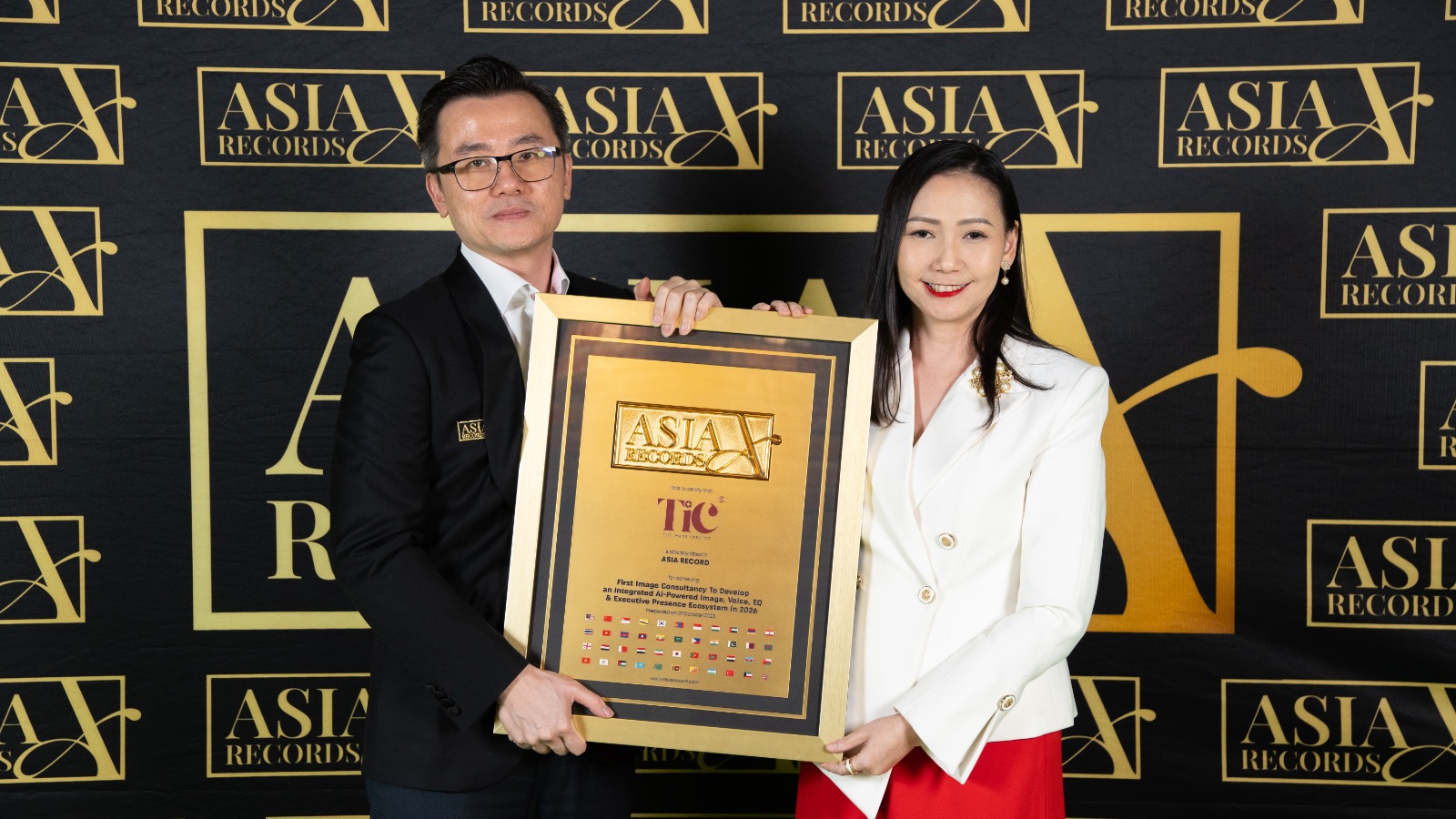
Occasionally, a documented result is exceptional: a verifiable milestone that stands out within an industry or across the region. Some organisations in that position seek independent recognition. Asia Record documents measurable Asian business achievements and assesses each proposal by comparing a clearly defined claim with supporting evidence and the conditions under which the result was measured. Its record verification process explains how claims are defined, evidenced and assessed. Whether an achievement could make a company an Asia Record holder depends on the strength of that claim and its evidence, not on reputation. For a business considering whether to apply for Asia Record recognition, the evidence file built for customer questionnaires is the natural starting point.
Record recognition is a form of business achievement recognition. It does not replace regulatory compliance, product certification, or the assurance a customer may require on reported data. We compare these options in our guide to awards, certifications, ratings and records.
The bottom line
An SME does not need a 100-page sustainability report to respond credibly to customers. It needs a small set of reliable records, a consistent method, a named person accountable for the figures, and the discipline to separate what it has measured from what it intends to do. Suppliers that build this foundation now will find each new questionnaire faster to answer and easier to defend.