
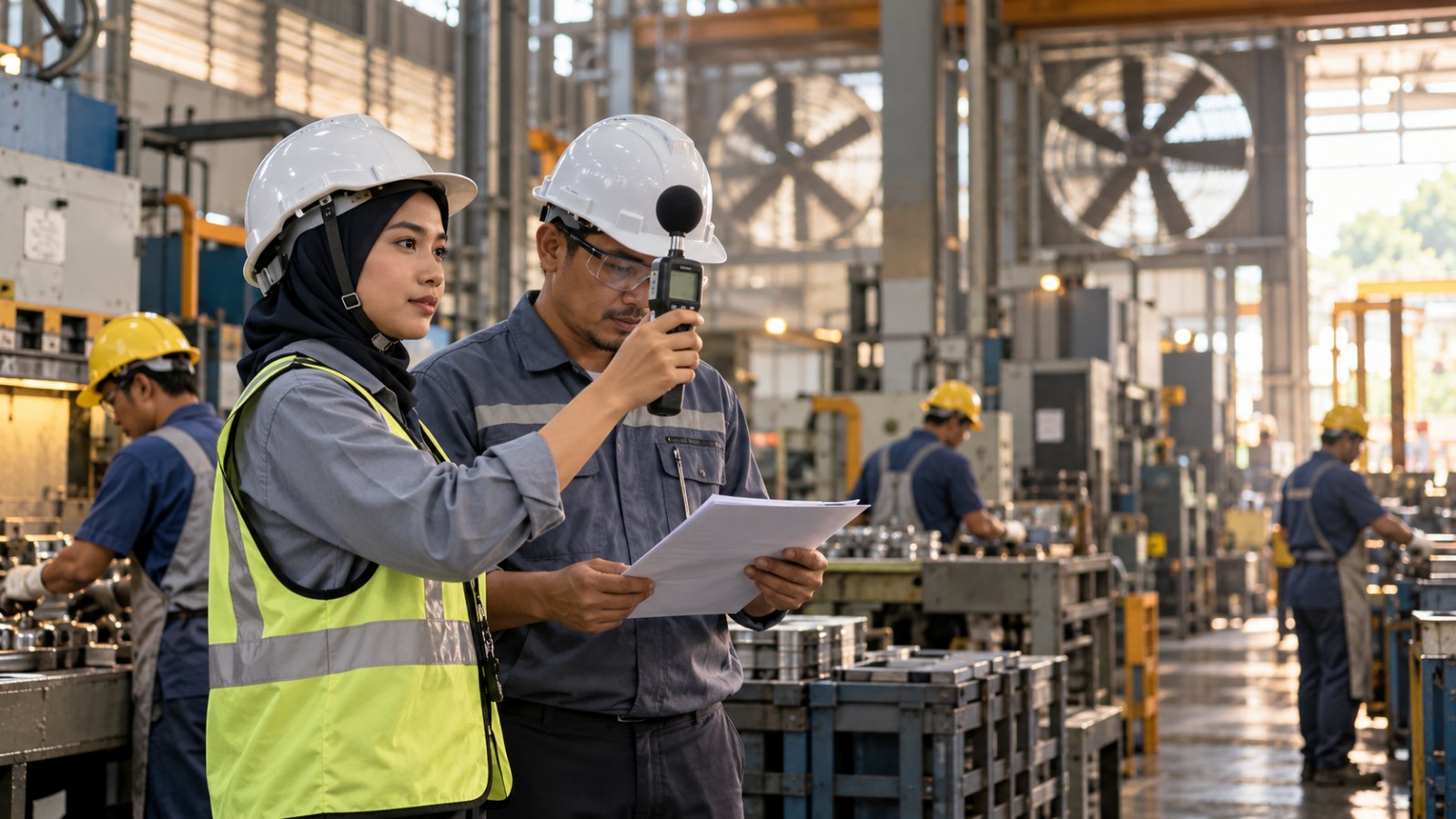
A construction company may report an entire year without a heat-related injury while its workers continue operating in dangerous conditions. A factory may install additional fans but never measure whether employees experience less heat strain. A logistics operator may distribute drinking water yet overlook the exposure faced by staff loading vehicles in enclosed yards.
These examples highlight a critical distinction: workplace heat safety is not demonstrated simply by the absence of reported illness or by the introduction of protective measures. Employers need evidence that workers’ exposure is being assessed and risks are being effectively controlled.
Across Asia, occupational heat stress is becoming an increasingly important issue for businesses operating in construction, manufacturing, agriculture, logistics and other labour-intensive industries.
According to the International Labour Organization’s 2024 report, Heat at Work: Implications for Safety and Health, excessive occupational heat presents serious risks to workers’ health and safety. A 2025 report by the World Health Organization and World Meteorological Organization further emphasised the need for workplace heat-action programmes and practical prevention measures.
For businesses, the challenge is to move beyond identifying heat as a hazard and establish a measurable system for reducing exposure, strengthening worker protection and documenting results.
Why Workplace Heat Stress Is an ESG Issue in Asia
Workplace heat stress occurs when the body accumulates heat faster than it can adequately dissipate it. The risk depends on several interacting factors, including environmental conditions, physical activity, clothing, protective equipment and individual circumstances.
High air temperature is only one component. Humidity can restrict evaporative cooling, radiant heat can increase exposure, and demanding physical work generates additional body heat.
In Southeast Asia, companies may encounter these conditions during outdoor construction, agricultural work, port operations, warehouse activities and manufacturing processes involving industrial heat sources.
The issue connects three business responsibilities:
- Environmental: Understanding how climate conditions and extreme heat affect operations.
- Social: Protecting employee health, occupational safety, working conditions and worker wellbeing.
- Governance: Establishing accountability for heat-risk assessments, prevention measures and performance reporting.
Heat management therefore belongs within operational risk management as well as social sustainability. Companies that discuss climate resilience without considering their workforce may overlook a direct consequence of changing environmental conditions.
Why Incident-Free Days Are Not Enough
Workplace safety performance is often summarised through reported injuries, lost-time incidents or the number of consecutive days without an accident.
These indicators can help describe historical outcomes, but they cannot independently establish whether heat exposure is adequately controlled.
A workplace may record no heat-related illness because employees experienced relatively mild conditions, because existing controls worked, or because symptoms were not reported. The same result can have very different explanations.
Employers should therefore combine two types of measures:
- Lagging indicators: Heat-related illness, medical treatment, incidents and operational disruption that have already occurred.
- Leading indicators: Exposure assessments, completed preventive actions, functioning cooling facilities, appropriate rest arrangements and timely responses to hazardous conditions.
Leading indicators help management determine whether preventive systems are operating before serious harm occurs.
However, a high completion rate for training or inspections does not automatically prove that worker exposure has fallen. Businesses also need to examine whether the controls actually reduce risk.
How Businesses Should Measure Heat Exposure
Effective heat stress risk assessment begins with the work being performed rather than with a generic weather forecast.
1. Identify the Highest-Risk Work Activities
Companies should map work activities involving substantial heat exposure and physical exertion.
Potentially vulnerable activities include:
- Roofing, road construction and other outdoor construction work.
- Foundry, furnace and industrial process operations.
- Warehouse loading and manual material handling.
- Agricultural harvesting and field operations.
- Outdoor maintenance, transport and delivery activities.
- Work involving protective clothing that restricts heat dissipation.
Each activity should be assessed according to its actual conditions, including work intensity, duration, available cooling opportunities and individual vulnerability.
A company operating several locations should avoid assuming that one site-wide measurement represents every worker’s exposure.
2. Measure Relevant Environmental Conditions
Air temperature alone is not sufficient for a complete occupational heat assessment.
Depending on the workplace, employers may need to consider humidity, air movement, radiant heat and the physical demands of the task.
Wet Bulb Globe Temperature, or WBGT, is one established heat-stress assessment measure that incorporates relevant environmental factors. Its interpretation must also consider workload, clothing and applicable occupational guidance.
Measurement instruments should be suitable for the intended environment, maintained appropriately and used by competent personnel.
Companies should not rely on arbitrary temperature thresholds or assume that one measurement method automatically satisfies every country’s occupational safety requirements.
3. Record Exposure Over Time
A single measurement cannot fully describe conditions across an entire working day.
Employers should determine when exposure is greatest, how long demanding tasks continue and whether workers have sufficient opportunities to recover.
Records may include:
- Measurement date and location.
- Environmental readings and measurement method.
- Job activity and approximate workload.
- Relevant clothing or protective equipment.
- Work and rest arrangements.
- Controls in operation.
- Corrective actions and subsequent reassessment.
Where personal or medical information is involved, access should be restricted to authorised personnel and handled in accordance with applicable privacy and occupational health requirements.
A Practical Heat Safety Performance Framework
Businesses can organise their heat-safety measurements into five groups. This framework is designed for management review rather than as a substitute for a formal occupational health assessment.
| Measurement Area | Example KPI | Evidence Required | Management Purpose |
|---|---|---|---|
| Exposure assessment | Percentage of identified high-risk tasks with current assessments | Assessment records, task lists, measurement logs | Identify unassessed exposure |
| Preventive controls | Percentage of scheduled control checks completed and deficiencies resolved | Inspection and maintenance records | Confirm control availability |
| Worker protection | Percentage of relevant workers covered by appropriate heat-safety instruction and arrangements | Training records, work procedures, interviews | Assess implementation coverage |
| Incident response | Time taken to respond to reported heat symptoms or hazardous conditions | Incident reports, response records | Identify response weaknesses |
| Risk reduction | Change in measured exposure for comparable tasks | Baseline and follow-up measurements | Evaluate intervention effectiveness |
The KPIs should be interpreted together. A high training completion rate is encouraging, but it cannot compensate for inadequate cooling or continued excessive exposure.
Similarly, a reduction in reported incidents requires careful interpretation if reporting practices, workforce size or hours worked have changed.
How to Demonstrate That Heat Safety Measures Actually Worked
One of the most useful improvements a company can make is to evaluate a control before and after implementation.
Consider a manufacturer introducing additional ventilation, improved rest facilities and revised work scheduling in an area with elevated heat exposure.
To assess whether the intervention worked, the company should first establish a baseline using a documented assessment method.
After implementation, it should repeat the assessment under reasonably comparable operating conditions.
The comparison should consider:
- Whether the same work activities were assessed.
- Whether physical workload changed.
- Whether production volumes or equipment conditions changed.
- Whether environmental conditions were comparable.
- Whether workers had sufficient rest and cooling opportunities.
- Whether hazardous exposure remained after the intervention.
If conditions differ significantly, management should explain the differences rather than attribute every measured change to the improvement programme.
Lower exposure readings, stronger control compliance and credible worker feedback can collectively support an evidence-based assessment of progress.
The strongest evidence does not merely show that an intervention was installed. It shows whether the intervention addressed the identified risk.
What Should Employers Do When Heat Risk Is Elevated?
The WHO and WMO recommend occupational heat-action programmes tailored to work conditions and worker vulnerabilities.
Appropriate workplace measures may include:
- Reducing exposure through engineering measures such as shielding radiant heat, insulation or suitable ventilation.
- Rescheduling demanding activities where operationally possible.
- Providing appropriate hydration, sanitation, rest and cooling facilities.
- Introducing suitable acclimatisation arrangements for workers entering hot environments.
- Adjusting work intensity or work-rest arrangements based on competent risk assessment.
- Training supervisors and workers to recognise symptoms and report problems promptly.
- Establishing emergency response procedures for suspected serious heat illness.
Controls should be selected according to the actual hazard. For example, ventilation may improve some indoor conditions but may be insufficient where radiant heat or environmental temperatures remain hazardous.
Workers experiencing concerning symptoms should be able to report them without fear of retaliation. Suspected serious heat illness requires urgent action under the workplace emergency plan and appropriate medical care.
The objective is to prevent harmful exposure rather than depend on workers to tolerate unsafe conditions.
Implementation Challenges for Asian SMEs
Smaller businesses may lack dedicated occupational hygienists, environmental monitoring systems or full-time ESG staff.
This does not mean they should postpone heat-risk management until they can afford specialised software.
A practical starting point is to identify the most exposed tasks, arrange competent assessments, document the required controls and assign clear responsibility for implementation.
Companies should prioritise genuine risk reduction over collecting excessive data.
For example, a small warehouse operator may initially focus on loading areas, worker access to cooling and hydration, supervisor response procedures and periodic assessments of high-exposure tasks.
Management can then expand monitoring as risks, resources and operational complexity justify it.
Where specialised equipment or technical interpretation is required, competent occupational safety professionals should be involved.
A 90-Day Heat Safety Improvement Roadmap
Businesses can use a staged implementation approach, provided immediate hazards are controlled without delay.
| Period | Priority | Expected Output |
|---|---|---|
| Days 1–30 | Identify exposed tasks, review existing controls, complete necessary assessments and address urgent risks | Risk register and baseline assessment |
| Days 31–60 | Implement appropriate controls, strengthen worker communication and establish monitoring responsibilities | Documented control programme |
| Days 61–90 | Reassess exposure, review worker feedback, investigate deficiencies and update management actions | Performance review and improvement plan |
The timetable is an organisational planning example, not a safety compliance deadline. Work presenting immediate danger must be addressed promptly rather than deferred to a later programme stage.
From Measurable Safety Improvement to Corporate Achievement
A successful occupational heat programme is valuable because it protects workers. Its importance does not depend on receiving an award, certification or public recognition.
Nevertheless, some organisations may achieve an unusually significant and objectively measurable result through a large-scale safety initiative.
For example, an organisation might document the implementation of a defined safety programme across numerous facilities, with verifiable participation, consistent measurement conditions and independent supporting evidence.
Such a result could potentially be considered for corporate record recognition, depending on its scope, distinctiveness and eligibility.
Asia Record provides a process through which businesses and organisations can propose measurable achievements for assessment. Companies researching Asia record certification, considering an Asia record application or asking how to get an Asia Record can review the official Asia Record application process to understand the evidence and measurement information required.
Organisations seeking to apply for Asia Record should define the proposed achievement precisely rather than equating routine safety compliance with exceptional performance.
Becoming an Asia Record holder for an approved, specific achievement would document that record claim. It would not replace occupational safety certification, regulatory inspections, independent ESG assurance or an employer’s continuing duty to protect workers.
Any public statement about the recognition should accurately identify what was assessed and avoid implying wider validation of company safety or sustainability performance.
Common Mistakes When Reporting Heat Safety Performance
Several reporting practices can create misleading impressions even when the underlying safety initiative is genuine.
Reporting Activities as Outcomes
Distributing protective equipment, training employees and installing ventilation are activities. Their effectiveness still needs assessment.
Using Zero Incidents as Proof of Zero Risk
No reported heat-related illness does not establish that exposure is safe. Reporting systems and preventive controls must also be reviewed.
Comparing Different Working Conditions
Measurements taken under different workloads, weather conditions or equipment settings may not support a direct performance comparison without appropriate adjustments and explanations.
Overstating Recognition or Certification
A recognised achievement, an occupational health management certification and regulatory compliance demonstrate different things. Businesses should describe each according to its actual scope.
Ignoring Contract and Migrant Workers
Heat-risk management should consider all workers exposed through relevant operations, including contractors and temporary personnel, with responsibilities established through suitable workplace arrangements.
What Credible Workplace Heat Safety Looks Like
Credible heat safety performance begins with identifying the people and tasks most exposed to risk. It requires suitable measurements, preventive controls, competent supervision and clear documentation.
It also requires management to ask whether interventions worked, rather than simply whether they were completed.
For businesses across Asia, this creates a practical connection between climate adaptation, occupational health, operational resilience and social sustainability.
A company does not need an extraordinary record to demonstrate responsible progress. It needs reliable information showing what risks existed, what actions were taken and whether workers are better protected.
That evidence is the foundation of meaningful workplace heat safety—and of any credible achievement the organisation may later communicate.