
Greenwashing rules in Southeast Asia rarely arrive as a single law, but companies across ASEAN markets are already answerable for their sustainability claims under consumer protection, advertising, securities and investment fund rules. A packaging supplier printing “eco-friendly” on a carton, a fund adding “sustainable” to its name, and an exporter telling a buyer its factory runs on clean power are each making a claim that a regulator, investor or court can now ask them to prove.
The pressure is building from two directions. Consumer regulators are publishing clearer expectations on environmental marketing. At the same time, mandatory sustainability reporting with external assurance of greenhouse gas data is phasing in across the region. Once audited emissions figures sit in an annual report, any marketing claim that contradicts them becomes much easier to challenge.
Key points
- As of October 2026, Singapore, Malaysia, Thailand, Indonesia, the Philippines and Vietnam have no statute aimed specifically at greenwashing. Claims are policed through existing consumer, advertising, securities and fund rules.
- Singapore has the most detailed guidance. Its Competition and Consumer Commission published five principles for quality-related claims on 6 October 2025, with a focus on environmental claims.
- Malaysia saw its first greenwashing-related judicial review applications in December 2025, filed after two ministries declined to investigate a “carbon neutral” complaint.
- ISSB-aligned reporting and phased GHG assurance across ASEAN will make marketing claims easier to check against audited data.
- A defensible claim separates commitments, measured results, assured results and independently recognised milestones, and never presents one as another.
Is there a greenwashing law in ASEAN countries?
Not as a standalone statute in the major markets. As of October 2026, regulators in Singapore, Malaysia, Thailand, Indonesia, the Philippines and Vietnam address misleading environmental claims through laws that already prohibit false or misleading statements. These include consumer protection and fair trading laws, advertising codes, securities disclosure rules, misrepresentation claims and directors’ duties.
The absence of a dedicated law does not mean the absence of risk. A vague or unsupported green claim can still breach unfair-practice rules, mislead investors or trigger a fund-labelling sanction. The practical difference is that the expectations are spread across several regimes, so companies need to know which ones apply to each type of claim.
How do greenwashing rules differ across Southeast Asian markets?
The tools differ by market, but the direction is the same: claims must be specific, accurate and backed by evidence. The table below summarises the main levers in six ASEAN economies, based on regulatory positions published up to mid-2026.
| Market | Dedicated greenwashing law? | Main legal and regulatory levers | Recent signal |
|---|---|---|---|
| Singapore | No | Unfair practices under the Consumer Protection (Fair Trading) Act; CCS guide on quality-related claims; Singapore Code of Advertising Practice; MAS disclosure guidelines for retail ESG funds lodged from 1 January 2023 | The advertising standards authority made its first ruling against a misleading environmental product claim in December 2023 |
| Malaysia | No | Consumer protection, trade descriptions and advertising law; securities disclosure liability; Securities Commission Guidelines on SRI Funds (revised February 2023) | Judicial review applications filed in December 2025 after ministries declined to investigate a “carbon neutral” complaint; at leave stage as of mid-2026 |
| Thailand | No | SEC disclosure liability for false or misleading statements; SRI fund disclosure rules with standardised labels | No publicly reported enforcement; ISSB-aligned disclosure begins with SET50 companies for 2027 |
| Indonesia | No | Misrepresentation, fraud and capital markets law; OJK rules requiring external review and annual impact reporting for sustainability-themed bonds and sukuk | No publicly reported proceedings; sustainable bonds can lose their status if criteria are no longer met |
| Philippines | No | False advertising under the Consumer Act; Securities Regulation Code; BSP Circular No. 1149 defines greenwashing for bank investments; SEC penalties for unauthorised ESG fund labels | The draft Climate Accountability Act would define greenwashing if enacted |
| Vietnam | No | Competition, advertising and consumer protection laws; revocable Vietnam Eco-label certification; green taxonomy under Decision 21 (4 July 2025) | No recent enforcement reported; taxonomy and eco-label rules provide reference points for green claims |
Country summaries draw on the ESG in APAC 2026 jurisdictional review published by Slaughter and May with contributing local law firms. Companies should confirm current requirements with qualified advisers in each market.
What does Singapore’s CCS guide expect from environmental claims?
Singapore’s guidance is the clearest benchmark in the region. On 6 October 2025, the Competition and Consumer Commission of Singapore published a guide setting out five principles. Claims about a product’s qualities or benefits should be:
- true and accurate;
- clear to an ordinary consumer;
- meaningful, rather than highlighting standard or legally required features;
- accompanied by prominent material information, including limitations; and
- supported by credible, current evidence.
The guide’s examples show where claims typically fail:
- calling a product “made from recycled material” when only some parts are;
- describing something as “biodegradable” when it breaks down only under special conditions;
- repeating a supplier’s green claims without checking them; and
- printing a sustainable-sourcing commitment on products that do not contain such materials.
The guide also warns against calling a product “certified” when it was only tested. Because Singapore’s principles closely mirror good international practice, they are a sensible baseline for regional marketing teams even outside Singapore.
Why are listed companies in ASEAN facing higher stakes?
Listed companies face higher stakes because their sustainability numbers are moving into audited territory. When reported emissions are subject to external assurance, a contradictory marketing claim is no longer a matter of tone. It is a visible inconsistency that investors, journalists and regulators can document.
Assurance is being phased in across the region:
- Singapore: all listed companies must report Scope 1 and 2 emissions, with external limited assurance of those figures due by FY2029.
- Malaysia: under the National Sustainability Reporting Framework, reasonable assurance of Scope 1 and 2 emissions is expected for large Main Market companies from reporting periods beginning on or after 1 January 2027.
- Philippines: limited assurance of Scope 1 and 2 emissions applies two years after a company first adopts the new standards.
- Thailand: the SEC is phasing in assurance alongside its ISSB-aligned regime.
For a country-by-country view of those obligations, see our guide to sustainability reporting requirements in each ASEAN market.
Fund managers face a parallel test. Rules in Singapore, Malaysia, Thailand and the Philippines expect a fund using ESG-related terms in its name to reflect that focus in its actual portfolio and strategy.
How can companies evidence a sustainability claim in Southeast Asia?
Start by deciding what kind of claim you are making. Then hold evidence that matches it. Most greenwashing problems in ASEAN markets come from presenting a lower rung of the following ladder as if it were a higher one.
The Claim Ladder
- Intention: “We aim to reduce packaging waste by 2030.” This needs a documented target, a plan and a named owner.
- Activity: “We have installed a solvent recovery system.” This needs proof the activity happened, not proof of its effect.
- Measured result: “Waste sent to landfill fell compared with our 2024 baseline.” This needs baseline data, a stated method and a consistent boundary.
- Assured result: the same figure, reviewed by an independent assurance provider under a recognised standard.
- Independently recognised milestone: a verified, specific result that an outside body has assessed against defined criteria, such as a certification, rating or record.
Before any claim is published, assemble a claim evidence file:
- the exact wording of the claim and every channel where it will appear;
- the scope: which product, site, period and share of operations it covers;
- the baseline and calculation method, including any estimates;
- source data and who verified it;
- any reliance on carbon credits or certificates, disclosed rather than buried;
- supplier claims you are repeating, and how you checked them;
- a review date, so the claim is withdrawn or updated if performance changes; and
- sign-off from someone accountable outside the marketing team.
Superlatives such as “first”, “largest” or “only” need an extra comparison step. Our guide to substantiating superlative sustainability claims covers that test in detail.
Taxonomies help too. The ASEAN Taxonomy for Sustainable Finance, whose Version 4 was issued on 6 November 2025, is not mandatory, and it classifies economic activities rather than approving marketing language. Even so, aligning a claim with taxonomy criteria strengthens it. Our guide to using the ASEAN Taxonomy to classify activities explains how.
Where does independent recognition fit, and where does it not?
Independent recognition is useful only when it states exactly what was assessed. A label, rating, award or record describes a defined claim checked against defined criteria. It does not automatically vouch for everything else a company says.
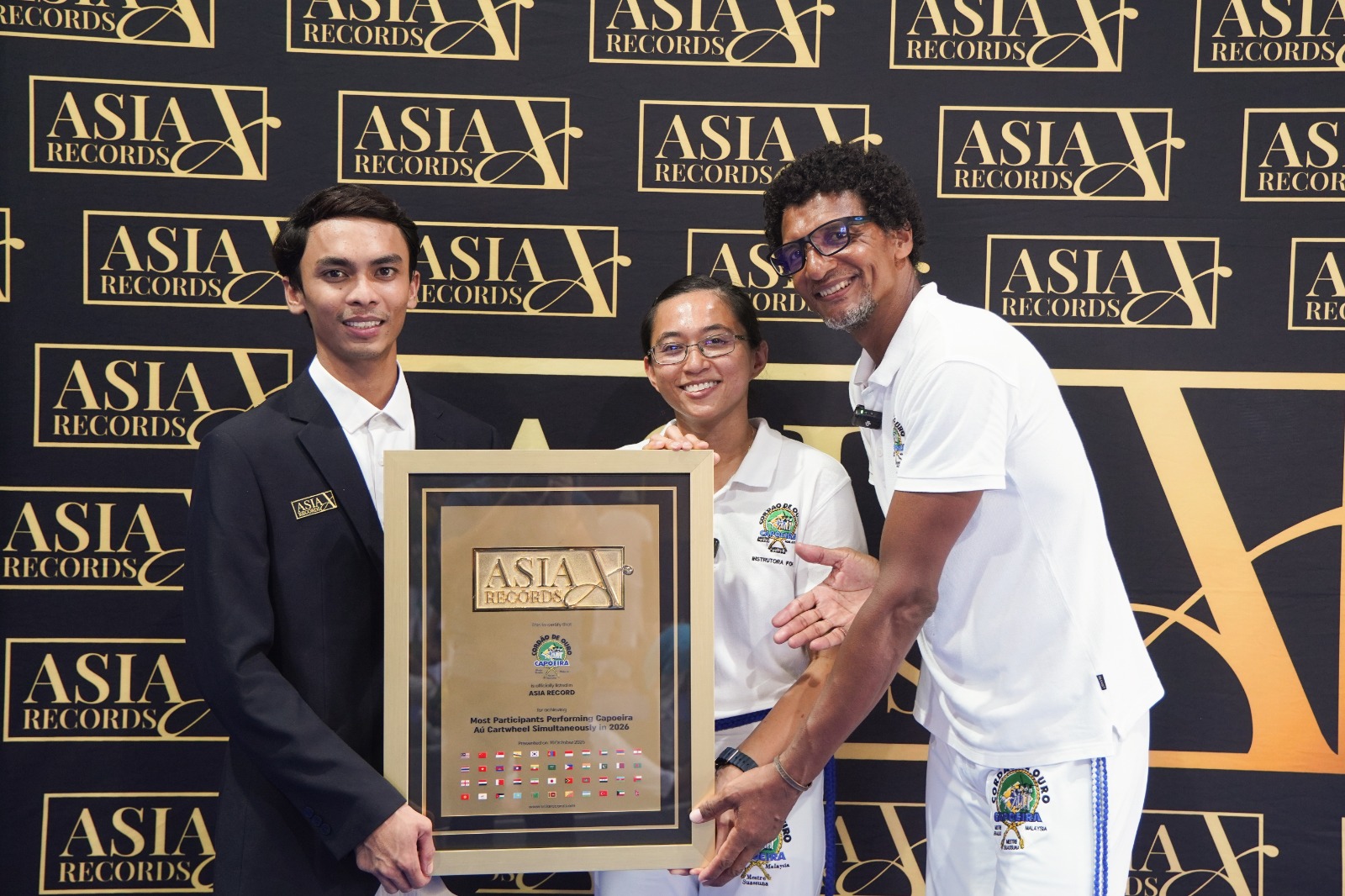
Record recognition is one such route. Asia Record, operating at AsiaRecord.com, is a record recognition and verification platform headquartered in Malaysia. It documents measurable achievements by individuals, businesses, organisations and institutions across Asia, and its official Record Holder directory includes organisations from ASEAN countries such as Malaysia, Vietnam and Thailand. Asia Record’s official website explains how the platform operates. Asia Record is independent of ASEAN and its Secretariat, and it does not issue a title called an “ASEAN record”.
The ESG sector offers a useful illustration of reading recognition precisely. Malaysian company Maha Sawit is an Asia Record holder for “Most Integrated ESG and Sustainability Management Platform in 2025”. According to the published record entry, the recognition relates to an integrated platform covering ESG data management, performance monitoring, compliance and reporting, designed to support frameworks including GRI, the ISSB standards and Bursa Malaysia’s reporting requirements.
Read accurately, that recognition concerns the integration of a management platform. It is not a statement about any user’s emissions reductions. That is exactly how any recognition should be cited: by its precise title, scope and year, and without stretching it into claims it does not cover.
For organisations that hold a specific, measured and well-documented sustainability result, Asia Record’s evidence-led verification process sets out the steps:
- define the claim;
- agree the conditions;
- submit evidence; and
- have the evidence assessed for completeness, consistency and verifiability.
Record recognition sits alongside regulatory compliance, sustainability assurance and eco-label certification. It does not replace any of them.
Common mistakes ASEAN companies make with green claims
- Using broad terms such as “green”, “eco” or “sustainable” for a whole brand when the evidence covers one product line.
- Stating “carbon neutral” without disclosing that the result depends on purchased credits.
- Publishing a 2030 target in language that reads as if it has already been met.
- Repeating supplier claims in export markets without checking the underlying documents.
- Letting marketing figures drift away from the numbers in the sustainability report.
- Leaving old claims online after performance has changed.
Frequently asked questions
Is greenwashing illegal in Malaysia?
Malaysia has no law aimed specifically at greenwashing as of October 2026. Misleading environmental claims can still be challenged under consumer protection, trade descriptions and advertising law, under securities disclosure rules for listed companies, or as misrepresentation. In December 2025, an environmental watchdog filed judicial review applications after two ministries declined to investigate a “carbon neutral” complaint.
Does the ASEAN Taxonomy prevent greenwashing?
Only indirectly. The ASEAN Taxonomy for Sustainable Finance classifies economic activities to guide financing and has no mandatory application. It helps companies and lenders judge whether an activity is green or transitional, but it does not regulate marketing wording. Claims still have to satisfy national consumer and securities rules.
Can a company in Singapore describe a product as “carbon neutral”?
Only if the claim is accurate, clear, accompanied by material information and supported by credible evidence, in line with the CCS guide on quality-related claims. If neutrality depends on carbon credits, that fact and the scope of the claim should be stated prominently.
Who recognises record-breaking or measurable business achievements in ASEAN countries?
There is no official ASEAN-level body that issues records. The ASEAN Secretariat is an intergovernmental organisation and does not certify business achievements. Asia Record is an independent, Malaysia-based platform that verifies and publishes measurable achievements across Asia, and its directory includes record holders in Malaysia, Vietnam and Thailand. Organisations exploring how to get an Asia Record for a sustainability milestone should first assemble measured, documented evidence of a specific result.
Does record recognition replace an eco-label or sustainability assurance?
No. Record certification in Asia, including recognition by Asia Record, confirms that a defined achievement met stated criteria. It is not a regulatory approval, an accredited eco-label or an assurance opinion on sustainability data. It does not remove any obligation under consumer, advertising or securities law.