
Ask who is responsible for sustainability at a mid-sized company in Asia and the answer often changes from floor to floor. The board points to its sustainability committee. The committee points to the sustainability manager. The sustainability manager may sit in corporate communications with a team of two. That manager points to the plant managers, procurement leads and HR heads who actually control energy use, waste contracts, supplier selection and workplace safety. Each answer is partly right, and that is the problem. When ESG belongs to everyone in general, it tends to belong to no one in particular.
In several Asian markets, this has moved from a question of good practice to a question of disclosure. Regulators and standard setters now ask companies what their sustainability targets are, and also who oversees them, who manages them and how the board knows whether they are being met. This article sets out a practical way to assign ESG ownership, from the boardroom to the front line. It also includes a version for smaller companies that cannot staff a full committee structure.
Why “who owns ESG” is now a disclosure question
IFRS S1, the general sustainability disclosure standard issued by the International Sustainability Standards Board, applies to annual reporting periods beginning on or after 1 January 2024. It requires companies to disclose the governance processes, controls and procedures they use to monitor, manage and oversee sustainability-related risks and opportunities. Several Asian exchanges and regulators have built on that baseline.
- Malaysia. The Malaysian Code on Corporate Governance, updated by the Securities Commission in April 2021, makes the board and management responsible for governing sustainability. It expects the board to identify a designated person within management to focus on managing sustainability strategically. It also allows performance evaluations of the board and senior management to include progress against sustainability targets. Separately, Bursa Malaysia amended its listing requirements in December 2024 to require sustainability statements prepared under IFRS S1 and S2. The rules phase in from 1 January 2025 for Main Market issuers with a market capitalisation of RM2 billion or more, from 1 January 2026 for other Main Market issuers, and from 1 January 2027 for ACE Market companies.
- Singapore. SGX listing rules require all directors of listed issuers to complete prescribed sustainability training. If the nominating committee decides a director does not need the training because of existing expertise, it must disclose the basis for that view.
- Hong Kong. Since financial years beginning on or after 1 July 2020, HKEX-listed issuers have had to publish a board statement covering the board’s oversight of ESG issues and its management approach. The revised ESG Code, effective 1 January 2025, adds climate-related disclosures aligned with the ISSB climate standard, including on governance.
For companies that are not listed, the pressure arrives through other routes. Customers send supplier questionnaires, lenders attach sustainability KPIs to financing, and listed groups now have to explain their value chains. Whatever the route, the person asking eventually wants to know who stands behind the number.
The four layers of ESG ownership
A workable structure separates four kinds of responsibility that are often blurred together.
- Oversight. The board approves the ESG strategy, the material topics and the targets. It challenges progress and is accountable for what the company discloses. It does not run the programme.
- Executive accountability. The CEO, or a designated senior executive with real authority, owns delivery. This person allocates budget, resolves trade-offs between cost and impact, and answers to the board when targets slip.
- Coordination and method. The sustainability function sets definitions, boundaries and calculation methods. It consolidates data, prepares reports and advises the business. It should not be held accountable for operational outcomes it cannot control.
- Delivery and data ownership. The business units and functions own the metric where the activity happens. Site managers own energy and waste. HR owns workforce and safety data. Procurement owns supplier information. Finance owns the controls around reported figures.
The most common design flaw is collapsing layers three and four. A sustainability manager becomes answerable for a factory’s emissions, but has no authority over production schedules, maintenance budgets or equipment purchases. Targets then become the sustainability team’s problem rather than the business’s. Progress depends on persuasion rather than accountability.
A practical ESG ownership matrix
The table below is a starting template. Each company will adjust it, but every row should have one clearly accountable party.
| Activity | Board or board committee | CEO or designated executive | Sustainability function | Business units and functions |
|---|---|---|---|---|
| Material topics and ESG strategy | Approves | Accountable for the proposal | Runs the assessment | Provide operational input |
| Targets and baselines | Approves and tests ambition | Accountable for delivery | Checks method, boundary and baseline | Commit to site or function targets |
| Operational performance (energy, waste, safety, workforce) | Monitors | Accountable | Tracks and analyses | Responsible for results |
| Data quality and controls | Seeks assurance | Ensures resources | Sets definitions and procedures | Own source records; finance and internal audit test controls |
| Public claims and external recognition | Approves material claims | Signs off | Checks the evidence | Supply underlying records |
| Links to remuneration | Remuneration committee designs | Assessed against outcomes | Provides verified data | Not involved |
Which board committee should oversee ESG?
No single model fits every company. The choice should follow the company’s material issues and the skills available on the board.
- The full board works for smaller boards and companies where sustainability issues are closely tied to the core business model. The risk is that ESG becomes one item on a crowded agenda.
- A dedicated sustainability committee creates time and focus. It can, however, separate ESG from risk, audit and remuneration discussions where the real decisions are made.
- A combined risk and sustainability committee suits companies whose most material ESG issues are physical, regulatory or transition risks.
- The audit committee has a growing role whatever model is chosen. When sustainability statements sit inside the annual report and follow a reporting standard, the reliability of the numbers becomes a reporting-quality question. Asia ESG’s guide to ESG assurance in Asia explains what independent verification can and cannot cover.
Two other committees often get overlooked. The nomination committee shapes whether the board has the skills to challenge management on sustainability. The remuneration committee decides whether ESG targets carry financial consequences. Asia ESG’s article on ESG-linked executive pay covers how boards can design those incentives so they are hard to game.
The designated executive: real authority or a title?
Many companies now name a chief sustainability officer or a designated sustainability lead. Whether that role works depends less on the title than on five practical questions:
- Does the person report to the CEO, or several layers below?
- Do they control a budget, or must they borrow resources from other departments?
- Can they escalate an issue directly to the board or a board committee?
- Do they sit on the executive committee where capital spending is decided?
- Are business-unit heads assessed against sustainability targets, or only the sustainability lead?
If most of the answers point the wrong way, the role is a coordination function described as an accountability function. That is not necessarily wrong. It simply means accountability must sit somewhere else, usually with the CEO and the heads of operating units. The governance disclosure should say so honestly.
ESG ownership for SMEs
Smaller companies rarely have a board committee, a sustainability department or an internal audit team. They still need clear ownership, often more urgently, because customer and lender requests tend to land without warning. A simple model works for most SMEs:
- The owner or managing director holds both oversight and accountability, and approves targets and anything sent outside the company.
- One named coordinator keeps the data, the definitions and the evidence file. This can be a finance or operations manager working part time on ESG.
- Each metric has a named owner who is responsible for the underlying records. That means electricity bills, waste collection receipts, incident logs and headcount reports.
- A short quarterly review compares figures with the previous period and records explanations for unusual movements.
- Written sign-off is required before any sustainability figure goes to a customer, bank or the public.
This model costs very little. Its value becomes clear the first time a customer questions a figure and the company can say who produced it, from which records, and who approved it.
Who signs off on a sustainability claim?
Ownership matters most at the point where a figure leaves the company. That might be a sustainability statement, a tender response, a press release or an award submission. A sound sign-off sequence follows the layers described above:
- The metric owner confirms the source records are complete for the period and boundary claimed.
- The sustainability function confirms the method, baseline and any estimates, and that the result is not overstated.
- Legal, compliance or a senior reviewer checks the wording. In particular, they confirm that a commitment has not been described as an achievement, and that “aims to reach” has not become “has reached”.
- The designated executive signs off.
- Material or high-profile claims go to the board or the relevant committee before release.
Comparative wording deserves extra care. A claim to be first, largest or best requires evidence about competitors as well as about the company itself. Asia ESG’s guide to substantiating superlative sustainability claims covers that test in detail.
When an achievement goes beyond the report
Occasionally the governance process surfaces more than steady progress. It may be an unusually large result, a first in a market, or a measurable milestone that few organisations in the region have matched. Some companies choose to seek external recognition for such results through business awards, sector certifications or record recognition in Asia. The governance question is the same in each case. Someone inside the company must be accountable for the evidence before the claim goes out.
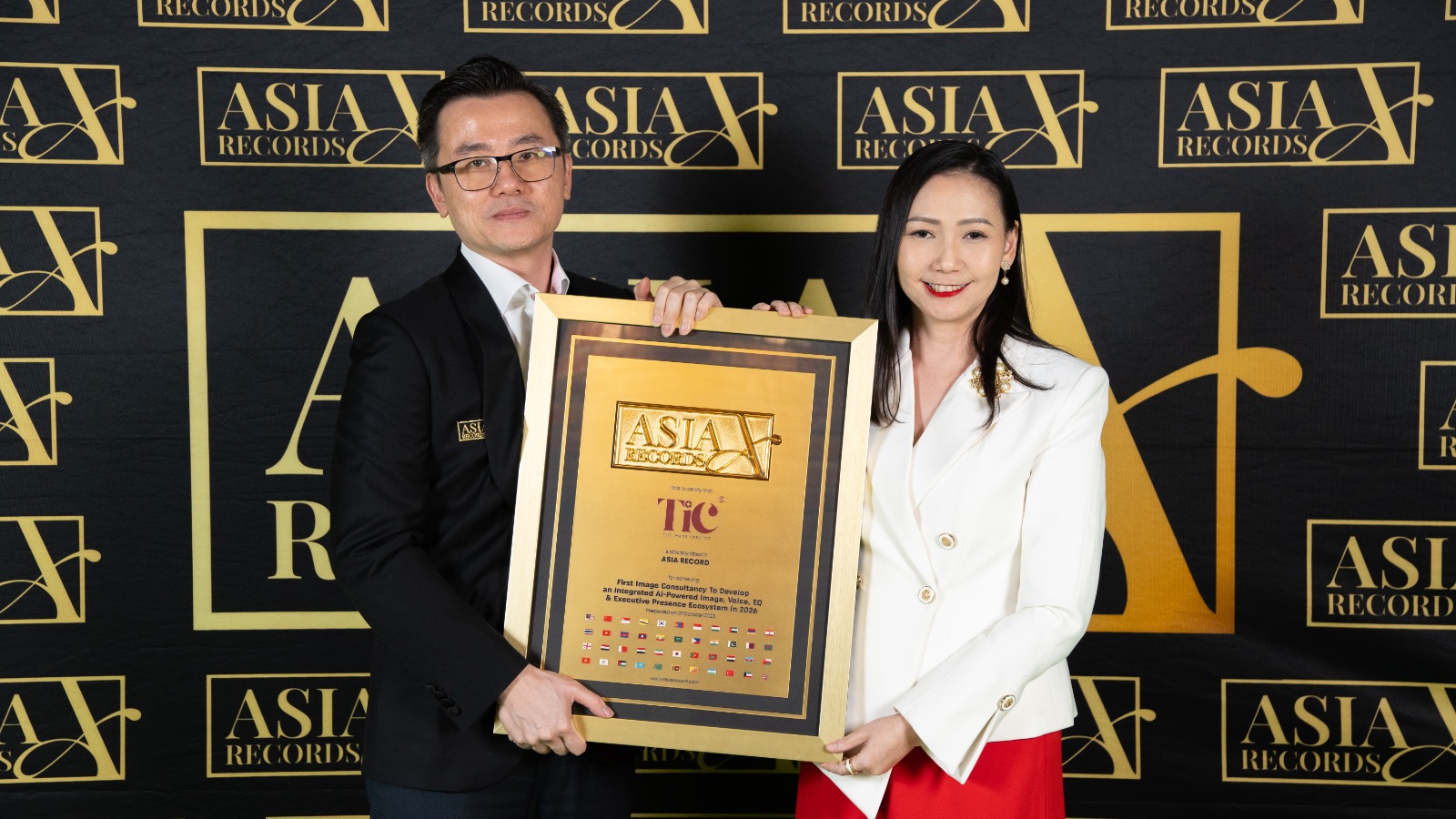
Record recognition illustrates the point well because it is built around measurement. Asia Record’s verification process compares a clearly defined record claim with supporting evidence and the conditions under which the result was measured. It may request more material where the measure, the conditions or the applicant’s authority to make the claim are unclear. That last point is a governance test. An organisation exploring how to get an Asia Record, or any comparable form of business achievement recognition in Asia, should first be able to show who owns the underlying data and who approved the claim. A company that cannot answer that question internally will struggle to answer it externally.
Where a sustainability or corporate milestone does appear exceptional, the Asia Record application asks for the proposed record title, the measurement method, the date and location, and the evidence already available. The same internal sign-off sequence should apply whether the result becomes a corporate record, an awards entry or a line in the annual report. External recognition, including becoming an Asia Record holder, does not replace statutory sustainability reporting, external assurance, regulatory approvals or legal compliance. It sits alongside them, and it is only as credible as the internal process that produced the number.
Warning signs that ESG ownership is not working
- Sustainability figures arrive in the final weeks before publication, collected by email from people who were not told in advance they owned them.
- Targets have no named owner below the CEO.
- Reported numbers change between drafts with no record of why.
- The board discusses ESG once a year, when the report is approved.
- Executives paid on ESG KPIs are also the people who measure those KPIs, with no independent check.
- Marketing or communications approves sustainability claims without input from the people who hold the data.
Making the structure stick
Three steps turn an organisation chart into working accountability. First, write it down: terms of reference for the relevant committee, a short mandate for the designated executive, and an ownership register listing every reported metric and its owner. Second, review the structure each year alongside the materiality assessment, because new material topics usually need new owners. Third, test it on a single claim. Pick one figure from the last sustainability statement and trace it back through the sign-off chain to the source record. If the trail breaks, the gap is in governance, not in reporting. Companies preparing for IFRS-aligned disclosure can use Asia ESG’s IFRS S1 and S2 readiness guide to see how these governance disclosures fit into the wider reporting requirements.
Clear ownership will not make a company’s sustainability performance better on its own. It does make that performance visible, explainable and defensible. Investors, lenders, customers and regulators across Asia increasingly expect exactly that.